



johndoe@gmail.com

“The universe is not only stranger than we imagine—it is stranger than we can imagine.” — Arthur Eddington
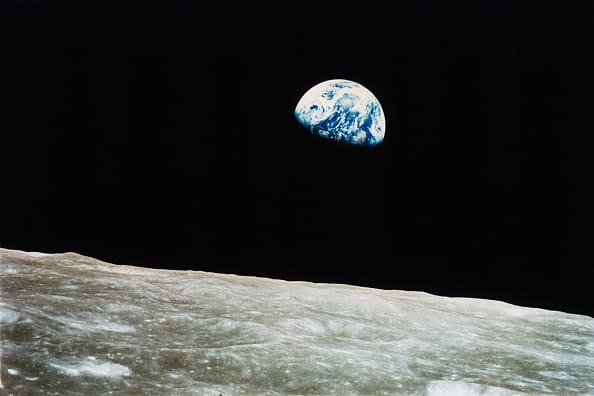
Perhaps no other image better represents the expansive mystery described by Eddington than Earthrise (1968, pictured above).
Suspended in darkness at the edge of a lunar precipice floats the glowing Earth, swirling with life. This iconic image, taken by the crew of Apollo 8 in 1968, was the culmination of a technological and ideological race to the moon. The world found itself in the lens fragile against vast blackness.
The reverberations of this moment would be felt across culture for decades to come, with narratives of space travel, technological advancement and utopian possibilities informing pop-culture, fashion and film, each new iteration a reflection of cultural optimism, fears and fantasies.
Now the launch of the Artemis II rocket signals the dawn of a new era of space travel. As the Earth dust settles, we reflect on how fashion embodies the conquest of space, the myth of the future and speculations on human and technological evolution.
New Frontiers
“To infinity… and beyond!” — Buzz Lightyear, Toy Story (1995)
The launch of the Sputnik satellite by the Soviet Union in 1957 marked the start of the Space Age with space exploration defined in President Kennedy’s 1961 speech to Congress as a ‘crucial frontier’.
Designers responded to the 1960s fascination with space travel by designing garments reflecting technological progress and utopian ideals, linked to the revolution in materials taking place at the time. Common elements of space-age fashion—metallic fabrics, synthetics like PVC and vinyl, geometric precision, minimalist lines, and stark palettes of white and silver —served as symbols of progress, modernity, and a collective faith in technological advancement.
Pivotal to this era was André Courrèges. His collections in the mid-1960s, such as spring/summer 1964 Moon Girl, cemented him as the “Father of Space Age fashion” with angular silhouettes and bold geometric cut-outs, accessorised with white boots and astronaut-inspired helmets or goggles.
Other designers such as Yves Saint Laurent, Paco Rabanne and Pierre Cardin pioneered the space-age look which collections such as Cosmocorps, 1963–64, which presented a vision of future space tourism.
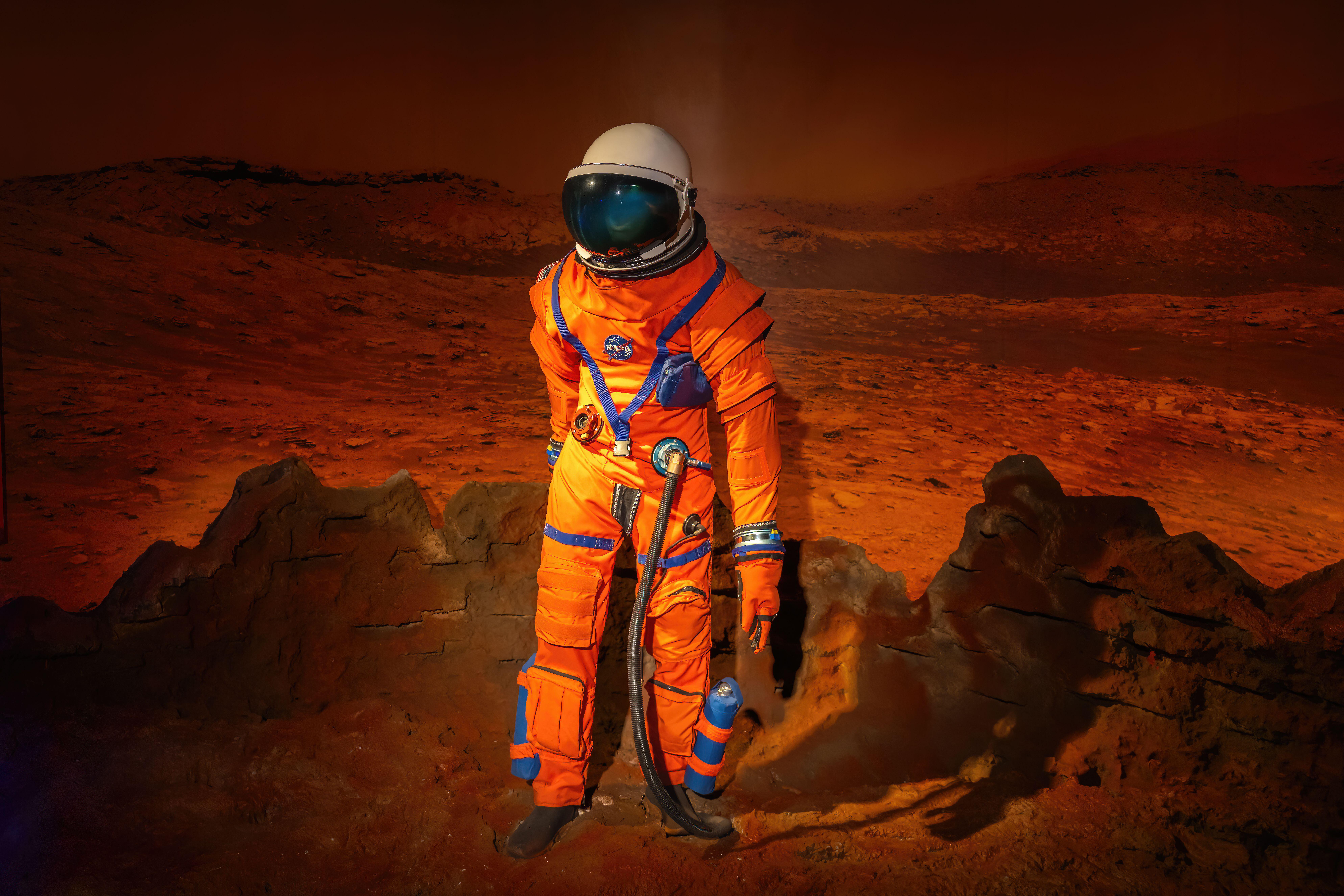
As cultural narratives surrounding space travel influenced fashion and pop culture, those trends, in turn shaped designs for apparel worn by actual astronauts. As private companies like SpaceX, Blue Origin, and Virgin Galactic have begun operating ‘edge of space’ tourism, a new intersection between fashion and space travel has emerged. This cultural innovation is reflected in the Artemis missions’ suits which are the product of a collaboration between Axiom Space and Prada.
Spacesuit design lies at the intersection of extreme engineering and aesthetics, a technological frontier in itself. Acting as a personal spacecraft, the suit has to remain durable in a an extremely hostile environment, whilst maintaining the mobility required to carry out tasks in space. In the protective interior environment of a spacecraft, passengers are safe from the vacuum of space but are weightless which poses its own challenges for clothing design.
Sci-fi Imaginaries
“Technology is the new couture.” — Hussein Chalayan
Science fiction and its associated futurism have provided frequent inspiration for designers. The darker cultural landscape of the 1970s, marked by the Vietnam War, economic instability and rising environmental concerns, overshadowed the space-age optimism of the previous decade.
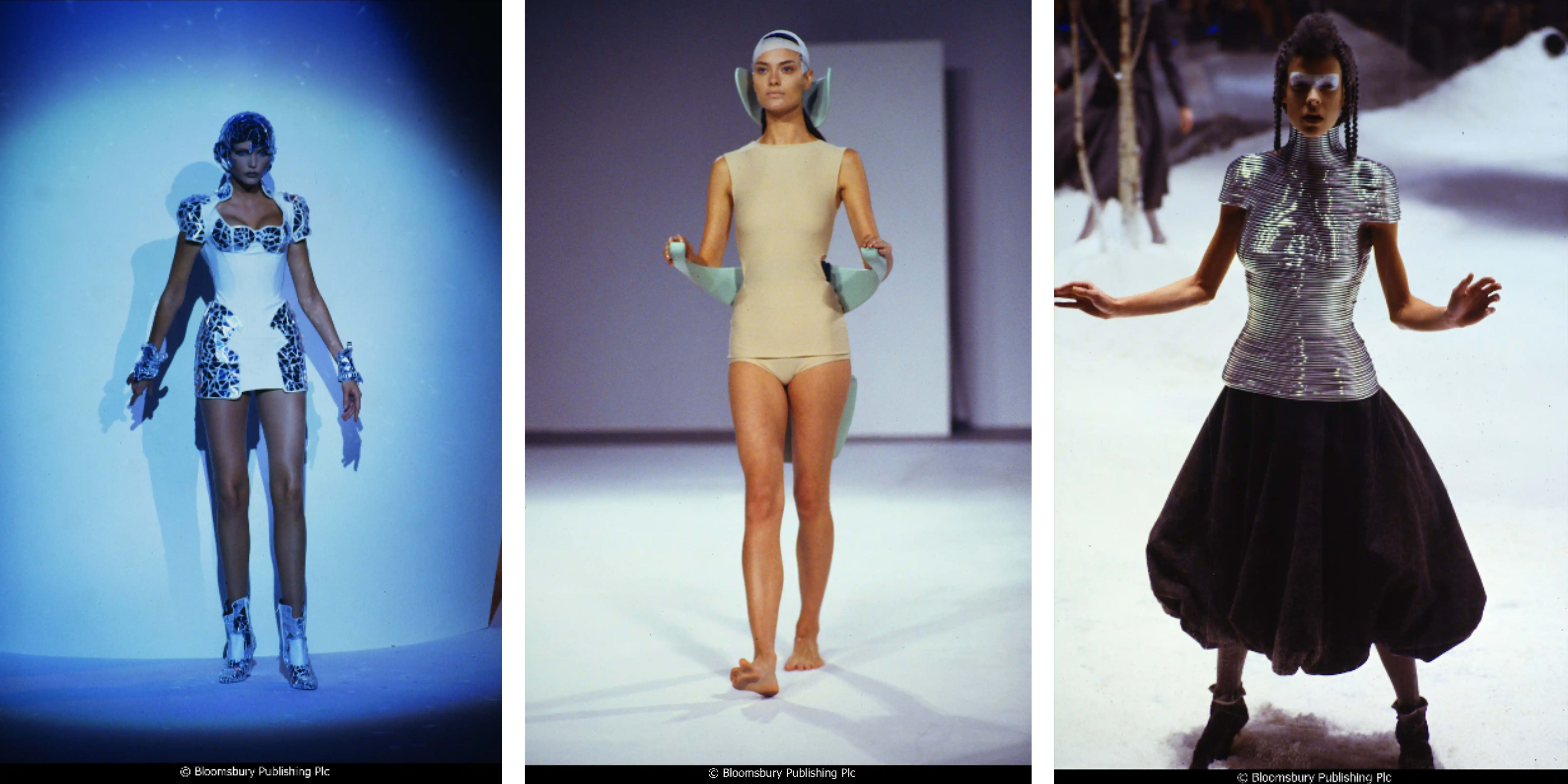
Designers started to incorporate elements of theatre, rebellion, and a more critical view of technology into their work, evidenced by the distinctive costumes from cult sci-fi films from Jean Paul Gaultier’s looks in The Fifth Element (1997) to the punk-rock garb in Blade Runner (1982) and the robot from the 1927 silent film Metropolis that inspired Thierry Mugler’s robot-like designs.
The experimental work of Hussein Chalayan at the dawn of the internet age helped birth techno fashion—designs influenced by techno culture, cyberpunk, and virtual reality. His autumn/winter 1998 show “Panoramic,” addressed the potential tensions between technology in the future, digitization, and individuality. The work of Alexander McQueen also explored similar themes of science as tool for destruction as much as for progress.
Techno-futurism
“The future has an ancient heart” — Carlo Levi
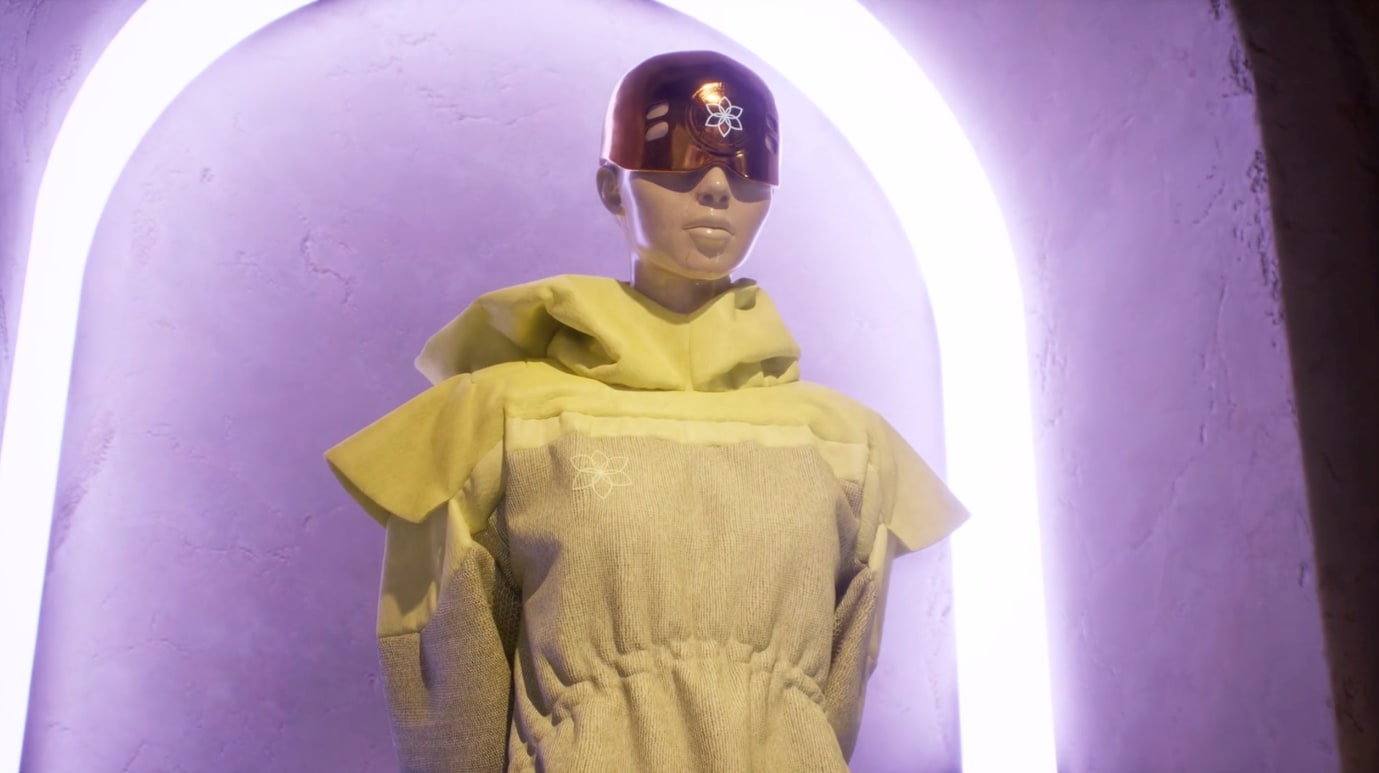
Space-age fashion expressed a new mythology of the future predicated on technological change. Contemporary fashion often revisits these visions of the past through the lens of retrofuturism—the creative act of remembering and imaginatively reinterpreting earlier depictions of the future.
As humans venture further into space than ever before with an eye on Mars, visions of an interplanetary future have been reshaped by fears of environmental destruction and the possibilities of humans merging with technology. A new generation of digital and virtual fashion designers are emerging who work with virtual reality (VR), artificial intelligence (AI), and the metaverse to creative new disciplines such as CG and 3D modelling.
Over half a century on from the Apollo missions, the cosmic imagination is sparked once again by the words of Artemis II spacecraft Commander Reid Wiseman "We have got a great Moonrise".
Find out about free trials and purchasing. Interested in hearing more from Bloomsbury Fashion Central? Sign up for our newsletter.
