



johndoe@gmail.com

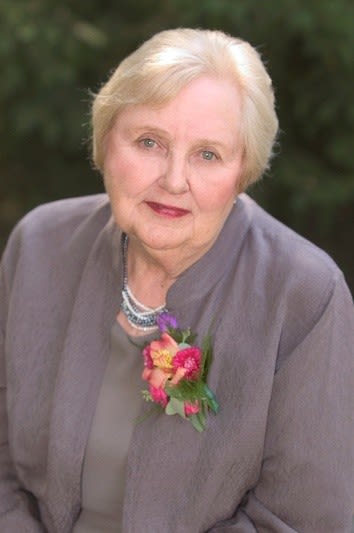
When we first met in September of 1994, Joanne Eicher was a professor (soon to be Regents Professor) in the Department of Design, Housing and Apparel at the University of Minnesota where she worked until her retirement. Her specialism was African textiles and dress, in particular of the Kalabari people.
Our meeting was the year after I joined Berg Publishers as a commissioning editor. Berg was a small UK academic press based in Oxford with a strength in social anthropology. I had no background in anthropology, and it can be a daunting subject to get your head around. But I noticed that Dress and Gender, a book we had published that was edited by Joanne, had performed extremely well. And she had another, Dress and Ethnicity, nearly at manuscript stage.
I had long had an interest in fashion, albeit as a consumer rather than an academic. So, the topic spoke to me. I wrote to Joanne (by international snailmail – this was all pre-email), asking whether it was an area she thought would support further publishing activity. And so began a correspondence that developed over time into a world of research activity consisting of many book publications, a 10-volume encyclopedia, and a database. And – far more importantly – a deep friendship.
Joanne convinced me (she was a very convincing woman!) that there was more research activity happening in dress than people understood. But it was siloed by discipline. There were, however, conferences where academics and curators writing on the topic converged. The publisher in me recognised an opportunity for sales; the scholar in Joanne recognized an opportunity to bring research to a broader audience while supporting others, many of whom were young academics just embarking on their careers. But, for Joanne, it was more than that – I don’t think I have ever met an academic with a more voracious appetite for their subject. She really wanted to learn everything.
As a result of our early discussions, we launched a book series together called Dress, Body, Culture. Underscoring interdisciplinarity, the series defined dress in its broadest sense as “any modification or supplement to the body.” The aim was to provide a forum for conversations around dress across disciplines. The book series today, now published by Bloomsbury, has around 80 titles in it – many of them having helped to establish the subject as a legitimate site for academic analysis. More recently, she has overseen a monograph series, also at Bloomsbury, Dress and Fashion Research. Together, the series account for nearly 100 titles. And, today, the fashion list as a whole is Bloomsbury’s fourth largest academic list – a testament to Joanne’s conviction, determination and vision.
Because of the book series, Berg launched Fashion Theory in 1997, a journal edited by Valerie Steele that has shaped the theoretical study of fashion (it is now with T&F). Joanne was its earliest advocate, and continued to serve on the board. We envisaged cross-pollination between the books and the journal, but not quite in the way it worked out. In those early days, we often scrambled to meet the three journal issues per annum we had promised the market, but thankfully we had books we could select chapters from for articles. Equally, journal articles provided excellent leads for books. Today, Fashion Theory publishes seven issues per annum – one measure of how the study of fashion has grown.
Then in the early 2000s, Joanne informed me that she had been approached by Sylvia Miller at Routledge to edit a 10-volume encyclopedia of world dress and fashion. It was to cover every country in the world, with the stated aim of not privileging the West, as so much scholarship before it had done. I was not happy. I had a background working on the MLA International Bibliography, and so had been thinking that it would be amazing if we could put all our dress content online in a database and supplement it with a bibliographical discovery tool. This was particularly needed because of the interdisciplinary silos in which academics tended to work. With this in mind, I had been collecting bibliographical materials, including a bibliography Joanne had published. But I knew from experience that maintaining a bibliographical database was resource intensive, and life at Berg was very hand to mouth. In short, it was a pipedream. However, when Joanne mentioned the encyclopedia, my immediate thought was that it would give us the ballast we needed for a digital product – not just bibliographic citations, but truly global article coverage. But it was Routledge’s! And they would never let the digital rights go.
I spent the better part of two years green with envy. But then I met Joanne at a conference, and she told me that Routledge was dropping their major reference program, and with it the encyclopedia. She needed a new publisher – she was very upset about it. She’d already put a lot of time and energy into the project and had lined up several editors. Contracts had even been signed. The project was clearly going to be pathbreaking, but it needed a home. Her first thought was to take it to OUP, given the scale and prestige of their reference program. But I said: ‘Joanne., we’ll do it!’ to which she replied, ‘But you have no money, and you don’t know anything about reference publishing.’ I could always rely on Joanne to tell me the unvarnished truth.
Nonetheless, I convinced her to give us a chance, which really was a risk for her. I wrote a business plan for our investors, got the commitment signed off, and we were off to the races. The project took five years from when Berg got it. I don’t think Joanne had any idea when she embarked on it just how all-consuming it would be (I certainly didn’t). It was huge – 3.6 million words across 760 articles, with 2000 images. And Joanne didn’t want scholars from the West writing about dress practices elsewhere – as much as possible, she wanted a forum that would amplify the work of local scholars, with all the linguistic and practical challenges that entailed. It was a beast.
In the end, we co-published the print encyclopedia with OUP and they distributed the digital product that resulted from it, The Berg Fashion Library (‘BFL’). Together, the print and digital incarnations won the coveted Dartmouth Medal. Since its launch in 2010, the BFL has regularly added encyclopedia articles, and Joanne was continuing to oversee them until her death.
In addition to the above, Joanne was co-editor of a highly influential textbook, The Visible Self. Published by Fairchild Books and now in its 5th edition, the work was originally co-edited with Mary Ellen Roach, and more recently with Sandra Lee Evenson. This is a classic that, for over 50 years, has introduced countless students to the social meaning of dress across cultures. Its influence is impossible to quantify but will have been profound. Until just before her death, Joanne was thinking about the next edition. As her daughter Carolyn communicated to me in the email about her passing: “She talked about color images inside the book and other details, even when her voice had become less strong. An academic, writer, creative thinker to the very end.”
The above is a brief overview of very big achievements, but there was so much more to Joanne’s life than work. She was a loving mother and devoted grandmother – she was so proud of her three daughters and her grandkids. Yet despite the demands of a very busy personal and academic life, she tirelessly supported countless scholars with their research and mentored so many, including myself. She helped to define a field with her unparalleled engagement, generosity and determination. She will be greatly missed by all who knew her. But her legacy is a world of learning that has grown around her passion, and that will endure.
