



johndoe@gmail.com

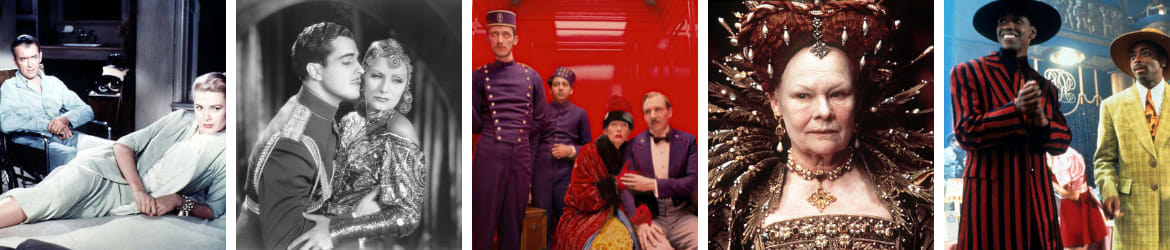
The Bloomsbury Encyclopedia of Film and Television Costume Design brings together the history, practice, and global reach of costume design for film and television. It reflects a commitment to recognizing the designers whose work shapes storytelling on screen and to documenting a field that has often been overlooked.
In this extracted version of the Preface, the Encyclopedia’s General Editor, Deborah Nadoolman Landis outlines how this project came into being, some of its challenges along the way, and the aims that guided its development.
The origins of the Encyclopedia
In 2015, while speaking at a Costume Society of America conference, I was approached by a Bloomsbury representative. She asked if I was interested in being the editor-in-chief of an encyclopedia of film costume design. I was both flattered and intrigued and we discussed the project over breakfast. Although I was a little perplexed by the proposal, the next morning I agreed to steward this legacy project, with some revision. If our encyclopedia was to be both diverse and comprehensive, I suggested that we needed to do more than tell the classic Hollywood (anglophone) story. Cinema and television are embedded in international popular culture. It is a language the world speaks. The encyclopedia would also need to recognize international costume designers and their contributions to global cinema. In 2016, the word “film” even felt anachronistic and constraining, as the blockbuster streaming series Game of Thrones (costume designer: Michele Clapton) ruled our dinner-table conversation. No contemporary encyclopedia would be complete without the remarkable achievements of costume designers for television and streaming platforms. I offered to rewrite the proposal to reflect this wider, broader, more inclusive perspective of costume designers everywhere and, with a leap of faith, Bloomsbury embraced my vision.
Pioneering scholarship
This Encyclopedia is nothing short of pioneering. As the very first authoritative reference work on costume design for film and television, all of our contributing authors were entering uncharted territory. Perhaps unique amongst works of this kind, the Encyclopedia has become an archive of original research. When assigning young scholars to profile key designers whose work has shaped the landscape of cinema and popular culture (you can read a couple of examples of these here), they often asked us where the basic biographical or production research could be found. They were shocked to find that they would be conducting the primary research for their article. With little published information available, some topics required hours and weeks of original research and interviews. Biographical information, including well established and Hollywood Golden Age costume designers (such as Travis Banton), was difficult to source. Library shelves were bare and marketing materials were thin when seeking the right quote or even an accurate birthdate. Many articles resemble abstracts for what could be later dissertations on the subject that they began to investigate.
Challenging misconceptions about the field
Despite the wide range of academic disciplines that have embraced television and motion pictures, costume design has played only a cameo role in the grand narratives of film history. Scholars wax eloquent about cinema, but costume design, traditionally a women’s field and always considered women’s work, has been neglected, marginalized, and misunderstood. The Encyclopedia is a deliberate corrective: it aims to challenge many of the common misconceptions about costume design and the essential role of the costume designer in film and television productions. By bringing clarity to this process, the encyclopedia aspires to raise the value and the sovereignty of the field. The Encyclopedia is an invitation to revisit the artistry and the contribution of costume designers to international popular culture.
Global scope and shared challenges
The international scope of the Encyclopedia posed other substantive challenges. Translating from multiple languages was difficult but not impossible. However, the vagaries and inconsistencies of crediting the costume designer, whether in India or Brazil, required tenacity. Missing on-screen credits, confusing titles, and routine conflations of the role of the designer with that of the costume supervisor (a management position) were common issues. Even the term for a costume designer varies country by country. In Spanish, a costume designer is a diseñadora de vestuario, or a vestuarista, or costumisti, depending on the continent. Many countries with cinematheques, archives, and long-established film industries have no record of costume design from the silent era or documentation on costuming. Biographical information for those classic and contemporary designers could not be found alongside the producers, directors, and actors of the time. Local authors did their best to discover and verify costume designers’ credits but there is much more research to be done. We traversed the globe to provide a brief introduction to costume designers collaborating on every continent and in our research we found that costume designers worldwide share the same struggle for recognition and wage equity.
Closing reflections
For many readers, The Bloomsbury Encyclopedia of Film and Television Costume Design may be their first introduction to the art of film and television costume design.
It invites them to consider the world of the costume designer and their magnificent contribution to our shared experience.
As a work-in-progress, in a digital environment, the Encyclopedia asks researchers globally to contribute to and join in this endeavor, to help update and expand these volumes, and to make certain that every costume designer will possess a place in their story.
The Bloomsbury Encyclopedia of Film and Television Costume Design is part of the Bloomsbury Dress and Costume Library which is available now – you can find out more about free trials and access here.
You can also check out a selection of free taster articles or read the full Preface here.
